







Quaternary Treatment - Key technical considerations when regulatory requirements meet real-world operation
The implementation of quaternary treatment represents a clear shift in wastewater treatment. Where the primary focus has traditionally been on conventional parameters such as organic matter, nitrogen and phosphorus, new requirements now target the removal of micropollutants that behave very differently – chemically, hydraulically and operationally.
This means that quaternary treatment cannot simply be regarded as an additional treatment step, but rather as an integrated process section that must be carefully incorporated into the overall plant design in order to ensure stable and reliable long-term operation.
Micropollutants place new demands on process design
Micropollutants may occur at very low concentrations, yet they span a wide range of chemical structures and degrees of degradability. Many are poorly biodegradable and respond differently to oxidation and adsorption processes. As a result, ozonation is often a central process step, either applied on its own or in combination with downstream filtration and activated carbon treatment.
In practice, this means that the treatment performance of quaternary treatment depends to a large extent on the interaction between hydraulics, particulate content, load variations and contact time.
Even small changes in influent composition or operational strategy can have a significant impact on overall treatment efficiency. For this reason, quaternary treatment places higher demands on process stability and robustness than many conventional treatment stages.
There is no standard solution
Experience from existing facilities clearly shows that quaternary treatment cannot be standardised in the same way as many conventional treatment processes. Each wastewater treatment plant has its own specific conditions in terms of hydraulics, space constraints, sludge strategy and existing process configuration.
For this reason, the solution should always be tailored to:
Plant size and flow variations
The selected core technology (e.g. adsorption, oxidation or combinations thereof)
Operational strategy and staffing
Requirements for documentation and stable performance
This means that the technology must be adapted to the plant – not the other way around. Modular solutions offer a clear advantage in this context, as they can be scaled and adjusted without introducing unnecessary operational complexity.
Ozonation as part of quaternary treatment
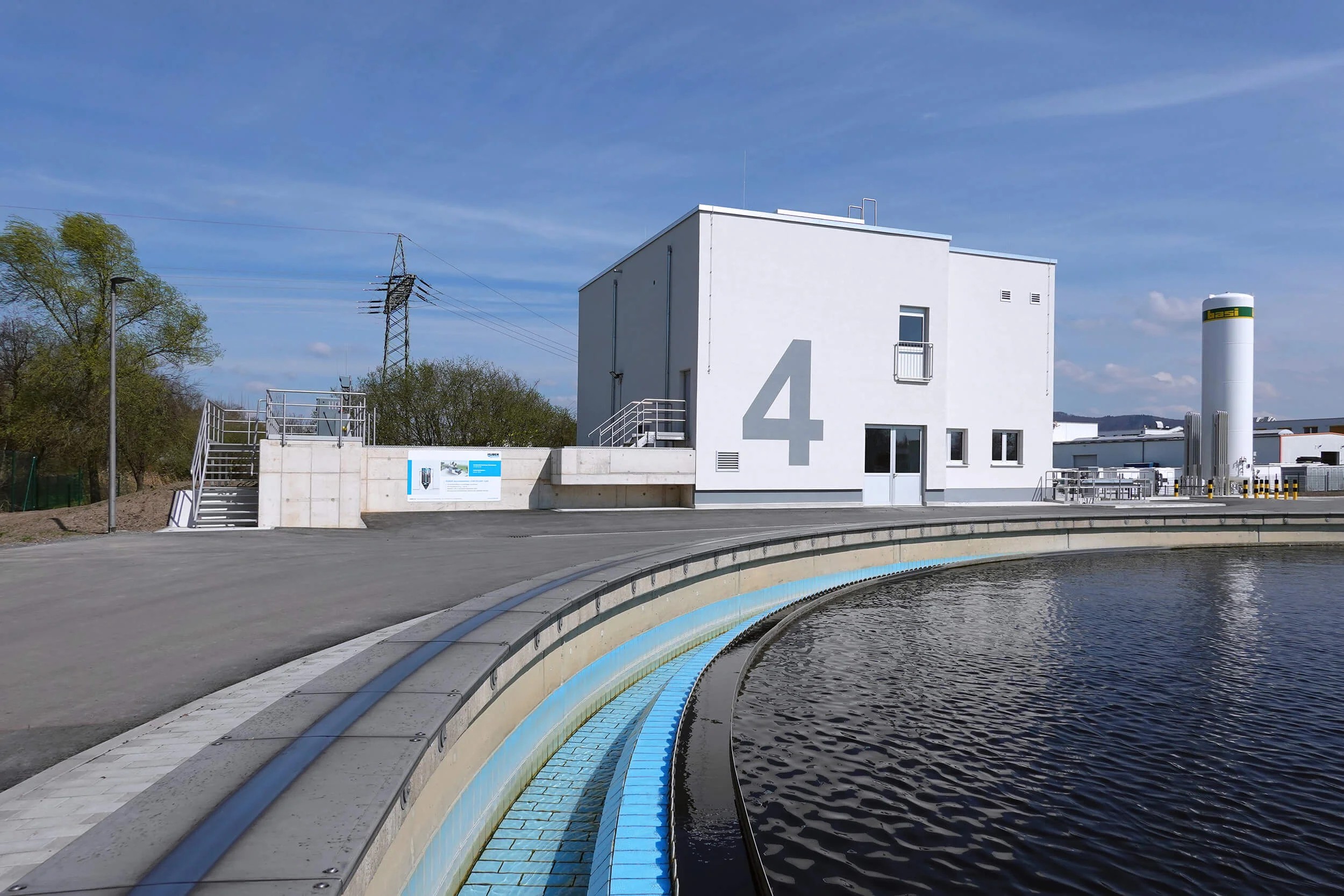
In many quaternary treatment systems, ozonation plays a crucial role in the degradation of micropollutants. Ozone acts by oxidising complex organic compounds, either removing them directly or transforming them into substances that are easier to manage in subsequent process steps.
At the same time, ozonation places specific demands on both pre-treatment and post-treatment. The presence of particles, organic matter and bromide can influence ozone demand and process stability. For this reason, ozonation is often combined with efficient filtration and, where relevant, adsorption using activated carbon in order to ensure a robust and reliable solution.
Filtration and separation as critical process steps
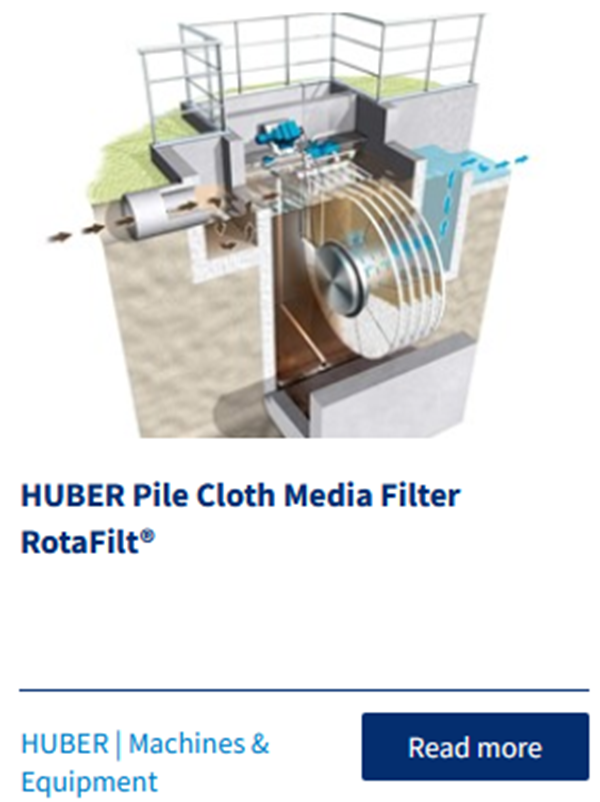
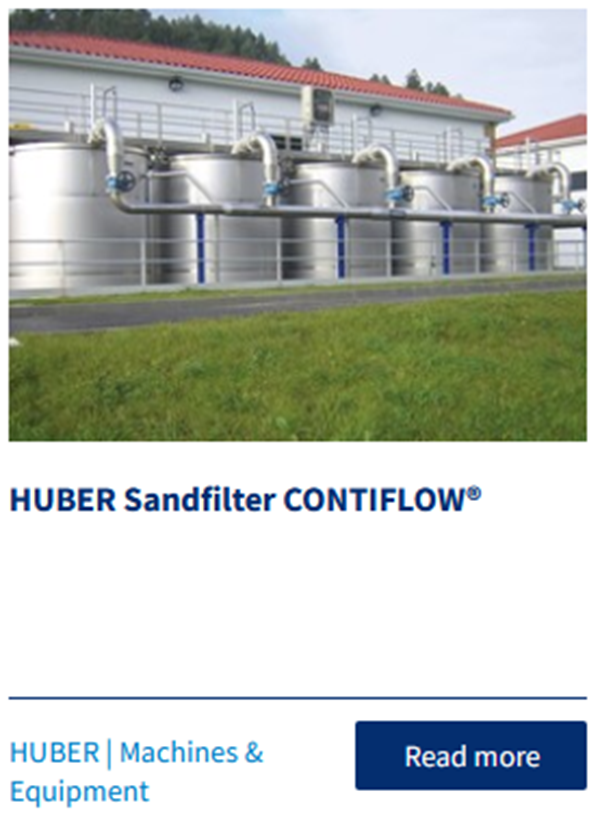
Regardless of which core process quaternary treatment is based on, filtration plays a central role – both as pre-treatment for ozonation and as polishing in combined solutions. Filtration is not merely a final polishing step, but an active part of the process with a direct impact on treatment performance, operational stability and the service life of downstream equipment, including ozone systems.
Effective filtration must be able to handle significant hydraulic variations, ensure continuous operation and remain user-friendly in daily operation. If filtration is not properly integrated into the overall process design, complexity is quickly shifted from the process itself to the operating staff.
From process design to day-to-day operation
One of the main challenges of quaternary treatment is ensuring that the solution performs not only under ideal conditions, but also in daily operation – with varying loads, seasonal fluctuations and limited operational resources.
For this reason, it is essential that process selection, equipment and control strategies support stable and predictable operation. The better the interfaces between individual process steps are defined, the easier the plant becomes to operate and maintain over time.
Aquagain’s approach to quaternary treatment
At Aquagain, we view quaternary treatment as an integrated part of the overall wastewater treatment plant. This includes filtration, adsorption and the integration of ozonation where required by the process design.
As a partner of HUBER, we work with technologies developed for continuous operation that can be seamlessly integrated into existing facilities. At the same time, we collaborate with specialised ozone suppliers, enabling us to deliver complete quaternary treatment solutions tailored to the specific conditions and requirements of each plant.
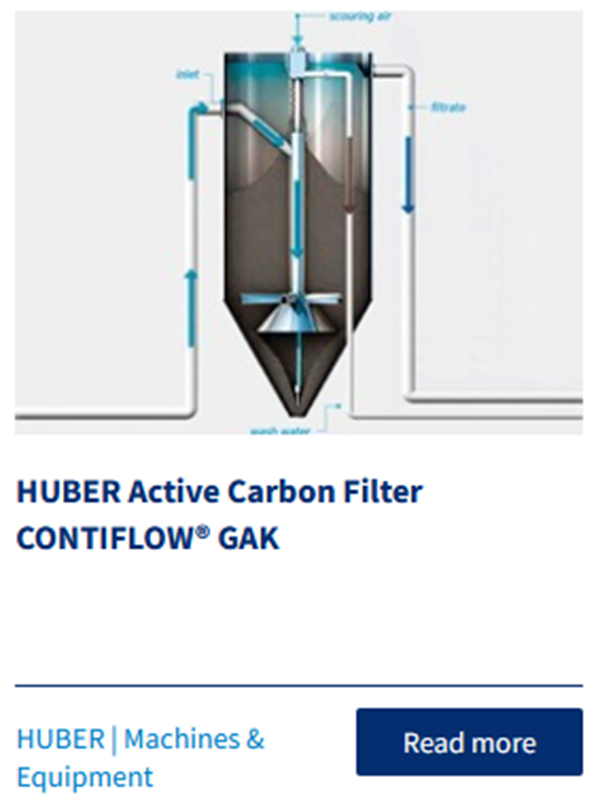
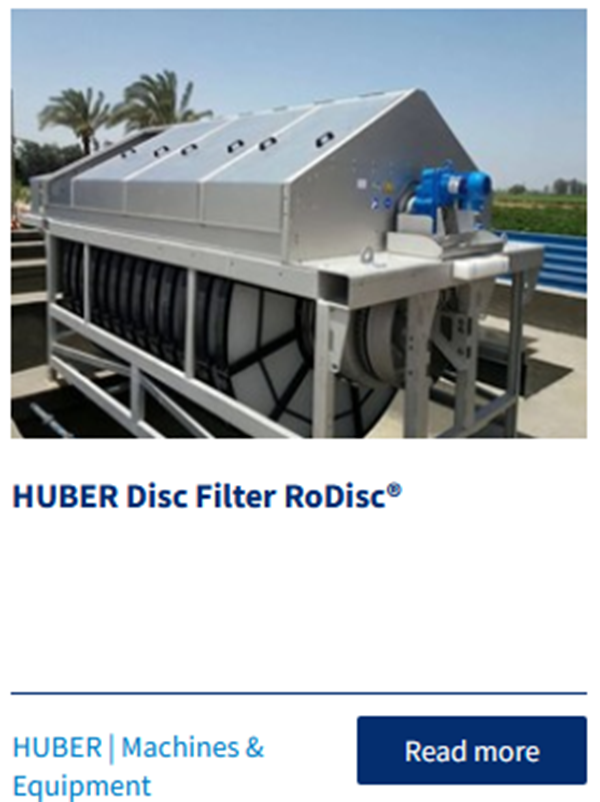
Below, you will find animations that provide a visual insight into the design and functionality of selected HUBER solutions used in quaternary treatment.
Our focus is to ensure that the solutions implemented are technically well-engineered, operationally practical and robust in the face of load variations. It is in the interaction between technology, process understanding and day-to-day operation that quaternary treatment becomes either a long-term asset – or a daily challenge.
Examples of HUBER technologies for quaternary treatment
Below are selected HUBER solutions that are often used as key building blocks in quaternary treatment. The products are typically part of integrated solutions where several process steps are combined to achieve the required treatment performance.
Click on the images to learn more about the individual technologies.
A rapidly evolving field
Although many regulatory details are still being clarified, the direction is clear: advanced removal of micropollutants will become a permanent element of future wastewater treatment. Plants that already take a systematic approach to the technical implications will be best positioned when regulatory requirements are translated into concrete projects.
At Aquagain, we closely follow these developments and are happy to provide technical dialogue and support when quaternary treatment is to be integrated into new or existing facilities.

Quaternary treatment often raises more questions than answers.
If you would like to learn more about how these solutions can work in practice at your plant, Tommy Nielsen is available for an informal technical dialogue.
Contact Tommy at tbn@aquagain.dk or +45 4099 5537.
Want to know more about Quaternary treatment
- Call us and we will be happy to help


Aquagain Folding Smed A/S • Vælding Bjergvej 4 • 6650 Brørup, Denmark • CVR no 54249616 • Tel. +45 75 38 13 30